How to Choose Paint Colors for a Honolulu Home That Gets Brutal Afternoon Sun

A west-facing wall in Honolulu can bake for five straight hours and then get hit with salt spray before dinner. I’ve watched a supposedly premium swatch of deep teal go chalky on that kind of wall in under a year. The paint was fine. The color choice was the problem.
Here’s the promise: by the end of this piece you’ll know how sun angle, sea air, and light temperature change the way a color looks and ages in Honolulu, and you’ll have a simple decision framework for picking shades that still look good three summers from now. Not every color survives island light, and the ones that do tend to share a few traits.
The short answer is that darker, more saturated colors fade faster and absorb more heat, while mid-tone and lighter shades in the warm range tend to hold their appearance longer on a sun-battered exterior. If you’d rather not gamble on a swatch, the smartest move is to bring in licensed house painters serving Honolulu who can show you how a color reads on your actual wall, not on a paper card under store lighting.
Why afternoon sun seems to eat certain colors
Sun angle matters more than most people think. A wall that faces west catches the hottest, lowest, most direct light of the day. That grazing light rakes across the surface and exposes every pigment weakness, every uneven patch, every underlying color that didn’t get a proper primer coat. A north wall in the same neighborhood can look untouched for years. Same street, same sun, totally different result.
UV exposure is the other half. According to the National Weather Service, Hawaii sits under some of the highest UV index readings in the country for much of the year. That’s not a fun fact. That’s the reason red pigments go first, then blues, then yellows hold longest. Dark cabinetry paint on a lanai door is basically a slow experiment in fading.
If you want a rule you can actually remember, here it is: the further you push a color from the neutral middle, the faster you should expect noticeable change. True red, deep navy, and saturated charcoal all look incredible on day one. On a sun-facing wall, they’re the shades that show their age first.
What sea air does that sun alone doesn’t
Salt doesn’t just corrode metal. It settles on painted surfaces and reacts with the film over time, and on a wall that gets sun all afternoon, you get a slow one-two combination: heat softens the coating, salt and moisture sit on it, then the next dry day bakes it in.
This is where the material under the paint matters as much as the color. Cracked stucco, pitted concrete, or a hairline spall on an exterior wall will let moisture in no matter how good the topcoat is, and once moisture is behind the paint, it blisters. A faded color is annoying. A blistering wall is expensive. If your exterior already shows chalky white residue when you rub it, that film is telling you the previous coating is breaking down and the next paint job needs prep first, not just a fresh color.
My stance: spend your budget on surface prep and primer before you spend a single extra dollar on a premium designer color. A mid-grade paint over a properly prepped wall will outlast a luxury paint slapped onto a dirty, cracked surface. Every time.
A simple framework I call the Four-Block Color Test
Here’s the framework. Before you commit to a color, test it in four positions around your home: the sun-facing wall, an early morning wall, a shaded entry, and a surface next to your existing trim. I call it the Four-Block Color Test because you’re basically blocking out the same color in four different lighting zones before you decide.
Here’s what each block tells you:
- Sun-facing wall: shows you how the color reads at peak heat and whether it goes flat or rich under direct light.
- Morning wall: catches cool light and reveals whether the shade has an undertone you didn’t expect.
- Shaded entry: tells you what guests see before the sun hits, which is often where a color looks dullest.
- Trim comparison: exposes clashing undertones that only show up when two colors sit side by side.
Paint a roughly two-foot square in each spot and leave it up for a full week. Half of the “wrong” color stories I’ve heard started with someone judging a swatch after five minutes on a cloudy Tuesday.
Interior rooms have the same problem, just harder to see
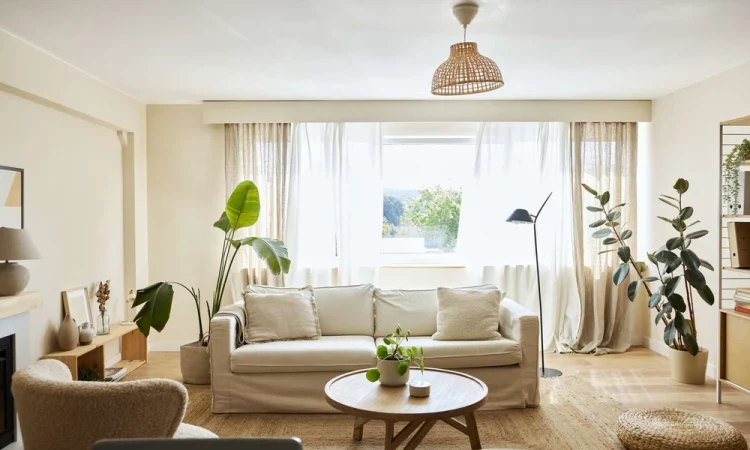
Interior walls don’t get UV the way exteriors do, but the sun still drives the show. A west-facing living room in Honolulu turns gold by late afternoon, and a cool gray that looked elegant in the paint store can turn muddy green under that warm light. North-facing rooms in the same house stay cool and blueish, so the same gray reads completely different two doors down.
Warm neutrals, soft whites, and greens with a little earth in them are the safest interior bets in island light. If you love a cool gray or a stark white, test it in the actual room at the actual hour you’ll use the room most. That is the only test that counts.
Five colors that hold their ground in island light
| Color family | Why it wears well | Watch out for |
|---|---|---|
| Warm off-white and sand | Hides fading, reflects heat, suits almost any architecture | Can look flat in shade, so trim needs contrast |
| Soft sage and muted green | Earth undertones age gracefully under warm sun | Can lean gray in north-facing rooms |
| Clay and terracotta neutrals | Color shift on fading is nearly invisible | Overpowering on very large walls |
| Pale buttercream yellow | Bright, forgiving, brightens shaded entries | Goes lemon under full afternoon light, so test first |
| Greige and warm gray | Modern, flexible, reads clean in most light | Cool versions can turn purple under warm sun |
None of these are glamorous picks. That’s the point. The colors that look best in a photo shoot are often the ones that look worst after three years of island sun, and the ones that look boring on day one look quietly correct on day one thousand and one.
Questions to ask before the crew arrives
You don’t need to become a paint chemist. You need to ask four things before anyone buys a bucket.
Ask what primer the job calls for, because primer choices are matched to concrete, stucco, wood, and previously painted surfaces, and the wrong one undermines any color. Ask how the painter will handle sun-facing walls specifically, since those often need more prep or a different product line than shaded walls on the same house.
Ask whether your existing paint is oil or latex, because you can’t just paint over some combinations without a bonding step. And ask what the realistic repaint interval is for the colors you’re considering on the sides of your home that take the worst sun.
One useful reference for the repaint question: older paint and lead concerns still apply to a lot of Hawaii homes, and the U.S. Environmental Protection Agency has clear baseline guidance on lead-safe renovation practices, which is worth raising if your home predates the 1978 cutoff. Better to know before sanding starts than after.
If you’re also touching trim, doors, or a lanai, use the National Archives as a surprisingly handy reference for documenting colors and finishes on your property, especially if you ever sell, refinance, or hand the home to family. A five-minute record now saves an hour of guessing later.
Color choice is a long game
The sun in Honolulu is going to test whatever you pick. That’s the deal. Pick colors in the warm neutral range if you want longevity, test them in the actual light they’ll live in, and put the money into prep before the shade. If you’ve already got a color picked out and want an honest opinion before the buckets arrive, walk the wall with someone who paints in this sun for a living, and ask them what they’d put on their own house. The answer tends to be a lot more practical than the paint chip.
What color has your house survived best on so far?