How Long a Florida AC Unit Really Lasts (and When Replacing It Saves You Money)

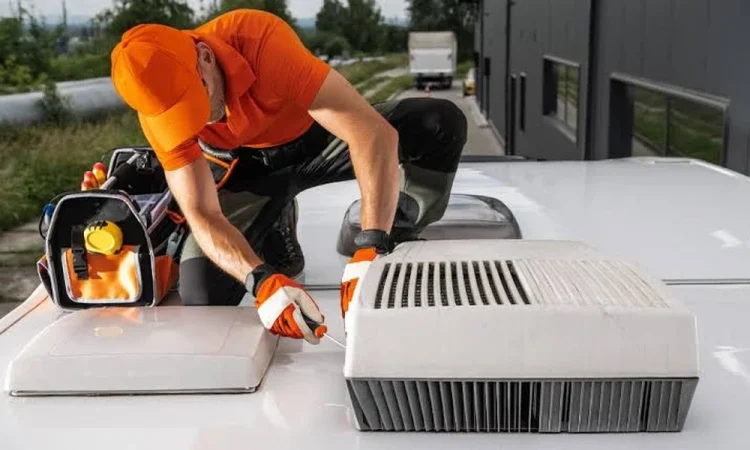
Ten years. That’s the number I’d bet on for a typical air conditioner sweating through a Florida summer, and it’s several years shorter than what the box promises. A unit rated for 15 years in a dry climate gets beaten down here by salt air, humidity that never quits, and a cooling season that runs from March to November. So when your system starts wheezing at year nine, that’s not bad luck. That’s Florida.
The tricky part is knowing whether to repair it again or finally let it go. You’ll get a different answer depending on who you ask, and the wrong call costs you either way: a repair bill that buys three months, or a new system you didn’t actually need yet. Below, I’ll walk through what actually wears these machines out, the math that tells you when to replace, and what to ask before you sign anything.
Why Florida Kills Air Conditioners Early
An AC unit’s lifespan is measured in operating hours as much as calendar years, and Florida piles on both. Up north, a system might run 1,200 hours a year. Here, it’s pushing 2,500 or more. Double the runtime means roughly double the wear on the compressor, the fan motor, the contactors, all of it.
Then there’s the environment. Coastal air carries salt that corrodes the outdoor condenser coil from the outside in. Year-round humidity keeps the coil wet, which invites the rust and biological growth that slowly choke airflow. The Department of Energy notes that a dirty, restricted condenser coil forces the system to work harder to move the same amount of heat, and over a decade of that, the compressor pays the price.
I’d rather see a homeowner replace a corroded coastal unit at year ten than nurse it to year twelve with three repair visits. The second path always costs more, and you spend those two extra summers praying the thing holds through August.
The Repair or Replace Math You Can Do in Your Head
Here’s the rule I actually use, and you can run it in about thirty seconds. Take the age of your system and multiply it by the cost of the repair you’re facing. If that number passes $5,000, replacement usually wins.
Say your unit is 11 years old and the compressor quote is $1,800. Eleven times 1,800 is 19,800, which blows past the threshold. That’s your answer: replace. Now imagine a 6-year-old system with a $400 blower motor. Six times 400 is 2,400, comfortably under the line. Repair it and move on.
Two more signals push the decision the same direction:
- A second major repair within 24 months on a system past year ten
- R-22 refrigerant, which was phased out years ago and now costs a small fortune per pound when you can even find it
I’ll be honest about the bias here. Contractors who sell equipment will lean toward selling equipment. So run the math yourself first, then compare it against the recommendation you get. If the numbers don’t line up, ask why.
What a Right-Sized Replacement Actually Involves
This is where a lot of homeowners get burned, and it has nothing to do with the brand on the box. A proper replacement starts with a load calculation, sometimes called a Manual J, which figures out how much cooling your specific house needs based on square footage, window orientation, insulation, ceiling height, and how much sun that west-facing wall takes every afternoon.
The Air Conditioning Contractors of America publishes those load calculation standards, and they exist because guessing is expensive. Oversize the system and it cools the house in short bursts, never runs long enough to pull humidity out of the air, and leaves you clammy in a house that technically hit its thermostat setting. Undersize it and the thing runs nonstop until it dies young.
If a company quotes you a new unit without measuring anything or asking about your insulation, that’s a red flag worth taking seriously. Ductwork matters just as much. Leaky ducts in a Florida attic can dump a chunk of your cooled air straight into 140-degree space, which means you’re paying to air-condition the attic. When you hire HVAC replacement in Sarasota County, FL, crews for the job, ask specifically whether a duct inspection is part of the proposal.
A Pre-Signature Checklist
Before you commit to any replacement, get these answered in writing:
- Load calculation included? Not a rule of thumb based on square footage alone.
- What SEER2 rating, and does it fit your budget after rebates? Higher efficiency costs more up front and pays back over years, not months.
- Is the line set being replaced or reused? Reusing an old line set with a new refrigerant system can void warranties.
- What’s the labor warranty length? Equipment warranties and labor warranties are two different things.
- Who pulls the permit? If the answer is “you,” walk away.
One more thing worth knowing: the Environmental Protection Agency regulates how refrigerants get handled during removal and disposal, so any legitimate crew will have a clear answer about refrigerant recovery. If they shrug at that question, that tells you plenty.
Timing It So You’re Not the One Sweating
Nobody replaces an AC at a convenient moment. It’s always the hottest week of the year, the house is 88 degrees by 2 p.m., and you’re making a five-figure decision while irritable. That’s a terrible setup for a smart choice.
The fix is boring but effective: plan the replacement during the shoulder season, roughly November through February, when you can take a few days to compare quotes instead of taking the first truck that shows up. You’ll usually get more attention, more scheduling flexibility, and a contractor who isn’t sprinting between emergency calls.
And if your system is sitting at year twelve right now with no problems? Start putting money aside. Not because it’s about to die tomorrow, but because the decision is coming, and you’d rather make it calm than desperate. A unit that’s been maintained twice a year can stretch past that ten-year mark. One that’s been ignored usually can’t.
So here’s your move this week: find the install date on your outdoor unit, run the age-times-repair math, and decide whether you’re in repair territory or replacement territory. If it’s replacement, get three quotes, insist on a load calculation, and do it before June. Your future self, the one not sweating through a July breakdown, will thank you.