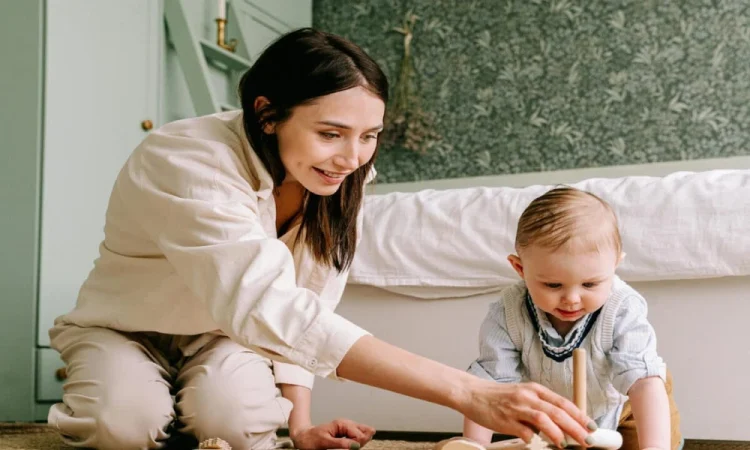
Before a child ever sets foot in a classroom, they’ve already logged thousands of hours of learning. You taught them. Every song you sang, every word you repeated, every block tower you knocked over together was a lesson. The science on this is not subtle: parental involvement in early childhood is one of the strongest predictors of a child’s long-term academic and social success, and it matters more than most parents realize.
This isn’t about drilling flashcards before age three. It’s about understanding the role you already play and getting intentional with it.
The Research Is Clearer Than You’d Expect
Researchers have spent decades trying to isolate what actually moves the needle for young learners. Income levels, school type, neighborhood – all of these factors matter, but none of them consistently trump one variable. For decades, researchers have pointed to one key success factor that transcends nearly all others, including socioeconomic status, student background, or the kind of school a student attends: parental involvement.
That’s a striking claim, and the data backs it up. Students whose parents stay involved in school have better attendance and behavior, get better grades, demonstrate better social skills, and adapt better to school. These effects don’t show up just in elementary school either. Longitudinal studies have shown that early parental engagement in schooling predicts stronger interpersonal skills, higher rates of secondary school completion, and more stable employment in early adulthood.
The Annie E. Casey Foundation, which tracks child wellbeing data across the United States, reported in 2025 that classrooms with engaged families perform better as a whole, meaning the benefits ripple outward to every child in the room, not just your own.
What “Being Involved” Actually Looks Like
Here’s where things get practical. Most parents assume involvement means volunteering at school fundraisers or helping with homework. Both count, but the research points to something deeper: how you interact with your child during everyday, unstructured moments.
Picture a Tuesday morning in a Honolulu household. A mother and her four-year-old are sorting laundry together. The child holds up a red shirt. Mom asks: “How many red things can you find?” They count. They sort. They talk. That’s a math lesson, a vocabulary lesson, and a relationship-building moment packed into six minutes of what looked like a chore. No curriculum required.
Robust family involvement practices include parental engagement in homework and learning activities at home, and participation in school-led educational workshops. These practices have been associated with improvements in academic performance, including literacy and numeracy outcomes, as well as enhanced social-emotional skills such as self-regulation and empathy.
The key insight is that involvement is not a single behavior. It’s a posture toward your child’s learning that shows up across dozens of small moments each day.
Introducing the First Teacher Framework
Based on the research on family engagement, parental involvement can be organized into three distinct roles that parents naturally cycle through. Think of this as the First Teacher Framework. Each role serves a different developmental function, and the most effective parents move between all three rather than camping in just one.
| Role | What It Looks Like | Core Benefit |
|---|---|---|
| Observer | Watching your child play independently, noticing what captures their attention | Builds your understanding of their interests and developmental stage |
| Participant | Joining play on the child’s terms, following their lead without redirecting | Strengthens trust, communication, and intrinsic motivation to learn |
| Architect | Designing environments and routines that invite exploration and language | Gives unstructured moments educational shape without forcing instruction |
Most parents default to the Architect role, setting up the environment and then stepping away. The research suggests the Participant role is where the deepest learning happens. When you get on the floor and play with your child, you’re not just bonding. You’re modeling language, problem-solving, and emotional regulation in real time.
Why Programs That Include Parents Outperform Those That Don’t
Early childhood programs that actively involve parents rather than just enrolling children consistently show stronger outcomes. This is because the learning environment doesn’t stop at the classroom door. In one study, researchers found that children whose mothers were trained to use learning materials at home had “significant advances in reading and math tests” when they entered school, and these advantages persisted into the fourth grade.
A 2025 systematic review published in the Early Childhood Education Journal by Springer Nature found that meta-analytic research demonstrated that robust family involvement correlates with improvement in academic performance, social-emotional competencies, and mental health outcomes. The researchers also noted a consistent finding across cultures and income levels: the earlier families engage, the longer the benefits last.
Programs that bring parents into the learning space alongside their children create something a standard preschool cannot replicate on its own: a living bridge between home and classroom. That bridge is what makes the learning stick. The parent-child relationship becomes the curriculum, with teachers serving as guides rather than sole instructors.
This is exactly the model behind parent participation programs in Hawaii, where families learn alongside their keiki, practicing values like Aloha and Kuleana within structured community-based settings. The cultural grounding matters too. When children see their family’s values and language reflected in their learning environment, their sense of identity and belonging deepens alongside their academic readiness.
What Hawaii’s Landscape Tells Us
Hawaii’s investment in early childhood education has been expanding. The National Institute for Early Education Research reported that in the 2024-2025 school year, Hawaii planned to add up to 1,480 new public pre-K slots statewide, a signal that state leaders recognize the window between ages three and five as a critical period for intervention.
That investment in seat count only works when the seats come with strong family engagement built in. More enrollment without deeper parent connection is a partial solution. The families most likely to benefit from early childhood programs are often the ones with the least institutional support, and for those families, having a parent actively present in the learning space changes the equation completely.
“Parent involvement has been consistently recognized as a key program element that can promote the effectiveness of early childhood interventions.” – National Institute for Early Education Research, reviewing evidence from the Midwest Child-Parent Centers study.
A Practical Checklist for the First Teacher Role
You don’t need a teaching degree or a curriculum binder. You need consistency and presence. Here’s a simple weekly checklist any parent can act on:
- Set aside at least one 20-minute block each day where your child leads the play and you follow along without redirecting.
- Name what your child is doing out loud: “You’re stacking those from biggest to smallest. That’s sorting.” Language narration builds vocabulary faster than flashcards.
- Ask open-ended questions during ordinary tasks: “What do you think will happen if…?” matters more than quizzing on colors and shapes.
- Connect with your child’s classroom teacher at least once a month, not only at formal conferences. Brief check-ins keep both environments aligned.
- If a structured program is available in your area, attend alongside your child. The shared experience is the point.
The research is consistent and the verdict isn’t close. A child’s first teacher is not their kindergarten instructor or their preschool director. It’s you. The question isn’t whether you’re teaching your child. You already are. The question is whether you’re doing it on purpose.
What would change for your family if you treated one ordinary moment each day as a classroom?